Elon Musk's Billion 'TeraFab': A Moonshot to Rewire the Semiconductor Industry: A Comprehensive Guide

Introduction
The global semiconductor industry has reached an absolute inflection point. For decades, the pace of technological advancement was comfortably dictated by Moore's Law, with silicon fabrication tightly controlled by a handful of established players. However, the explosive rise of artificial intelligence, large language models (LLMs), and autonomous systems has created a voracious, unprecedented demand for compute power. Developers and engineering teams face a massive bottleneck: accessing high-performance, cost-effective silicon without being locked into proprietary, legacy programming paradigms.
Enter Elon Musk's multi-billion 'TeraFab' initiative. Pitched as a radical moonshot to rewire the semiconductor industry from the ground up, the TeraFab is not just a physical manufacturing plant—it is an entirely new ecosystem. It aims to tear down the wall between hardware engineering and software development. By bypassing traditional supply chains and introducing a groundbreaking software-defined silicon architecture, TeraFab promises to democratize compute power.
For developers, the most disruptive aspect of this ecosystem is its native integration with high-level languages. Instead of relying exclusively on C++ and legacy frameworks to interface with AI accelerators, engineers can now use the official TeraFab SDK to provision, configure, and execute hardware-level instructions using TypeScript. This comprehensive guide will explore the hardware paradigm of Musk's TeraFab, dive deep into its developer ecosystem, and provide practical TypeScript examples to help you integrate TeraFab compute into your next-generation applications.
What is Elon Musk's Billion 'TeraFab'?
At its physical core, the TeraFab is a proposed trillion-dollar infrastructure project aimed at achieving "tera-scale" fabrication capabilities. Traditional foundries require months to iterate on chip designs, utilizing complex photolithography machines and rigid production lines. Musk's vision involves heavily automated, AI-driven manufacturing lines capable of dynamically printing application-specific integrated circuits (ASICs) at an unprecedented scale.
But why does this matter to software developers and system architects? The traditional hardware model separates the creator from the silicon. If you want to train a massive neural network today, you rent abstracted GPU instances from a cloud provider. You are subject to virtualization overhead, rigid cluster topologies, and software ecosystems that require highly specialized knowledge to optimize.
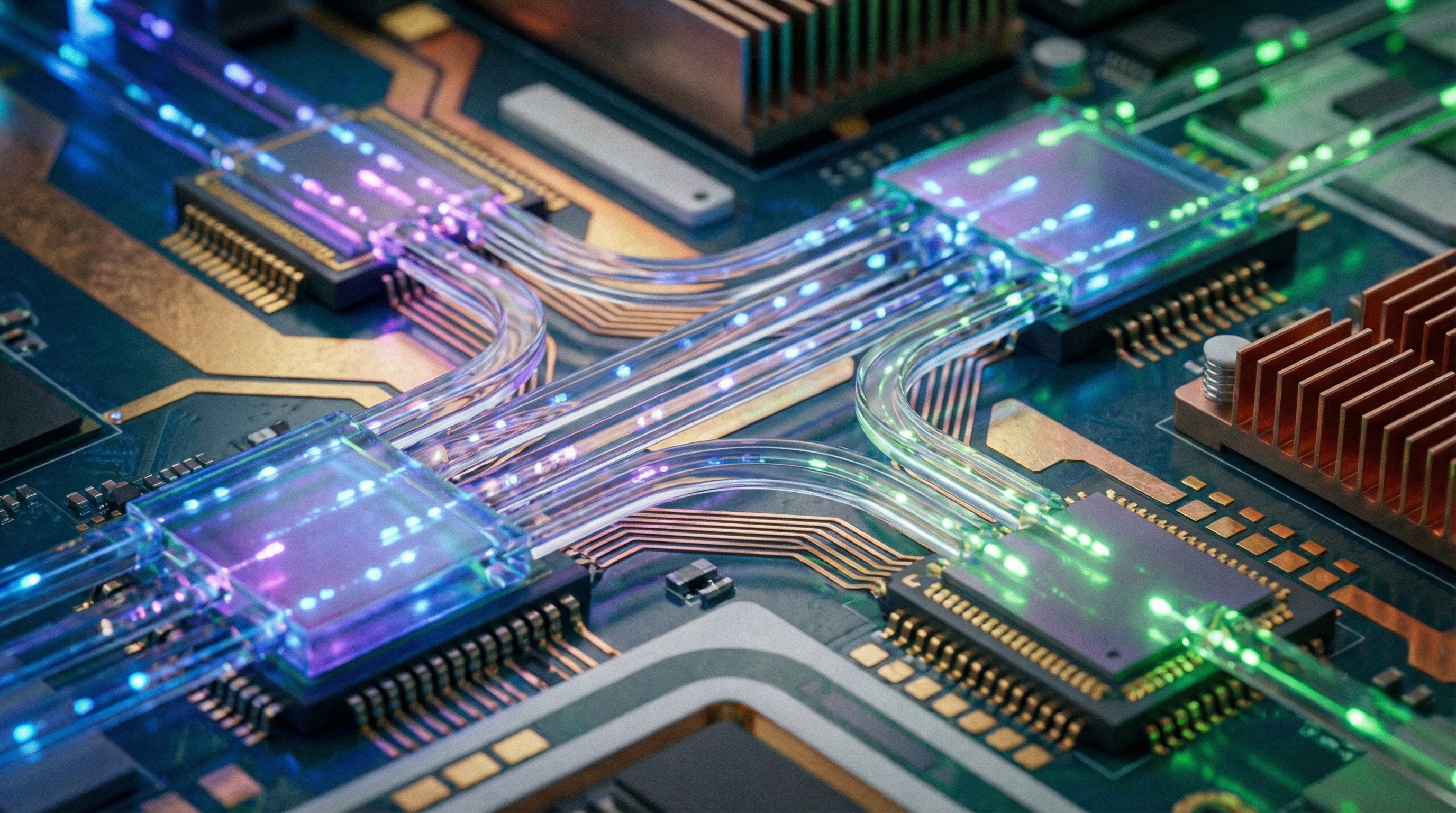
Elon Musk's Billion 'TeraFab' flips this model. It introduces the concept of "Silicon-as-a-Service" (SaaS) taken to its literal extreme. The TeraFab architecture abstracts the physical chip into programmable, logical blocks. Using the TeraFab Virtual Runtime (TVR), developers can request raw compute, memory, and interconnect bandwidth directly via an API. The hardware itself dynamically reconfigures its internal networking (via optical interconnects) to perfectly match the shape of your workload.
This matters immensely because it solves the core problem of AI and high-performance computing (HPC) scalability. It eliminates the "middlemen" of traditional operating systems and drivers, allowing high-level code to compile directly to the silicon's native instruction set. By understanding and utilizing the TeraFab SDK, engineering teams can drastically reduce inference latency, cut compute costs, and build applications that were previously constrained by standard hardware limitations.
Key Features and Capabilities
The TeraFab ecosystem is built upon several revolutionary features that bridge the gap between advanced manufacturing and modern software engineering. Below is a detailed breakdown of the capabilities that developers can leverage using the official toolchain.
Software-Defined Silicon Provisioning
Traditional hardware forces you to adapt your software to its architecture. TeraFab's software-defined silicon allows you to adapt the hardware to your software. Through the SDK, developers can define the exact ratio of tensor cores, vector processing units, and high-bandwidth memory blocks they need. The TeraFab runtime uses AI to dynamically partition the physical silicon cluster to perfectly match your requested topology, eliminating idle silicon and maximizing throughput.
Native TypeScript Direct-to-Silicon Compiler
Perhaps the most controversial and innovative feature is the TeraFab TypeScript Compiler (TTC). Writing hardware-accelerated code traditionally required deep knowledge of CUDA, OpenCL, or Triton. TeraFab introduces a strict superset of TypeScript that compiles directly into TeraFab Instruction Set Architecture (TISA). This means modern web and backend developers can write complex matrix operations and neural network layers using a syntax they already know, complete with strong static typing and modern IDE support.
Hyper-Bandwidth Optical Interconnects
Moving data between chips is often a bigger bottleneck than processing the data. TeraFab nodes are connected via proprietary photonic interconnects. From a software perspective, this means distributed computing across thousands of chips feels like developing on a single, massive processor. The SDK provides zero-copy memory primitives, allowing developers to allocate memory pools that are physically distributed across the fab but logically unified in code.
Quantum-Resilient Cryptographic Enclaves
Security is built directly into the silicon substrate. TeraFab instances can spawn hardware-isolated secure enclaves for processing highly sensitive data. Because these enclaves are isolated at the atomic level rather than via virtualization software, they are virtually immune to side-channel attacks. Developers can interact with these enclaves using simple asynchronous TypeScript methods, making enterprise-grade security accessible to any application.
Installation and Setup
Getting started with the TeraFab ecosystem requires the official CLI and the TypeScript SDK. Since the actual TeraFab hardware operates remotely in massive server farms, your local environment acts as the control plane and compiler target.
Prerequisites
To begin, ensure you have the following installed on your development machine:
- Node.js (v18.0.0 or higher)
- TypeScript (v5.0.0 or higher)
- A valid TeraFab API Key (obtained from the developer portal)
Installing the SDK
Initialize a new Node.js project and install the TeraFab dependencies:
npm init -y
npm install @terafab/sdk @terafab/compiler
npm install -D typescript @types/node
Configuration

Next, you need to configure the TeraFab compiler to recognize the hardware-specific types and compilation targets. Create a terafab.config.ts file in the root of your project:
import { TeraFabConfig } from '@terafab/compiler';

const config: TeraFabConfig = {
  target: 'tisa-v1', // TeraFab Instruction Set Architecture v1
  optimizationLevel: 3,
  clusterRegion: 'us-texas-central',
  authentication: {
    apiKey: process.env.TERAFAB_API_KEY || '',
  },
  memoryModel: 'unified-photonic',
};

export default config;
Update your tsconfig.json to ensure strict typing and experimental decorators are enabled, as the SDK relies heavily on decorators to map high-level code to hardware registers.
{
  "compilerOptions": {
    "target": "ESNext",
    "module": "CommonJS",
    "moduleResolution": "node",
    "strict": true,
    "experimentalDecorators": true,
    "emitDecoratorMetadata": true,
    "skipLibCheck": true
  }
}
With the environment set up, you are now ready to write code that compiles directly to Musk's revolutionary silicon.
Practical Examples
To truly understand the power of the TeraFab ecosystem, we must look at practical, runnable code. The following examples demonstrate how to provision hardware, execute complex math, and monitor the physical silicon from within a standard Node.js/TypeScript application.
Example 1: Provisioning a Custom Compute Cluster
Before running computations, you must request hardware resources. Instead of renting a generic "GPU instance," you define your exact silicon requirements.
import { ClusterManager, ComputeTopology } from '@terafab/sdk';

async function initializeSilicon() {
  const manager = new ClusterManager();
// Define a custom hardware topology tailored for LLM inference const topology: ComputeTopology = { tensorCores: 1024, vectorUnits: 512, unifiedMemoryGB: 120, interconnectBandwidthTbps: 3.2, priority: 'real-time' };
try { console.log('Requesting dynamic silicon allocation...'); const cluster = await manager.provision(topology);
console.log(`Cluster provisioned successfully. ID: ${cluster.id}`);
console.log(`Allocation latency: ${cluster.metrics.provisioningTimeMs}ms`);

return cluster;
} catch (error) { console.error('Failed to provision TeraFab hardware:', error); throw error; } }
### Example 2: Compiling and Running a Matrix Multiplication

This example demonstrates the Direct-to-Silicon compiler. By using the `@ComputeKernel` decorator, the TypeScript compiler converts the function directly into machine code for the TeraFab tensor processors, completely bypassing the V8 JavaScript engine.

```typescript
import { ComputeKernel, Tensor, TeraFabRuntime } from '@terafab/sdk';

// The decorator tells the TeraFab compiler to translate this
// directly into TISA (TeraFab Instruction Set Architecture)
@ComputeKernel({ optimizeFor: 'throughput' })
class NeuralMath {

  static async matrixMultiply(a: Tensor, b: Tensor): Promise<Tensor> {
    // This code looks like standard TS, but runs natively on silicon
    if (a.shape[1] !== b.shape[0]) {
      throw new Error('Invalid tensor dimensions for multiplication');
    }

    // Native hardware call abstracting millions of parallel operations
    return a.matmul(b);
  }
}

async function runMath() {
  const runtime = await TeraFabRuntime.connect();

  // Initialize 1000x1000 matrices directly in high-bandwidth memory
  const matrixA = runtime.createTensor([1000, 1000], 'random');
  const matrixB = runtime.createTensor([1000, 1000], 'random');

  console.time('SiliconMatMul');
  const result = await NeuralMath.matrixMultiply(matrixA, matrixB);
  console.timeEnd('SiliconMatMul');

  console.log(`Result shape: ${result.shape}`);
}
Example 3: Hardware Telemetry and Thermal Monitoring
Because you are running closely to the metal, TeraFab provides unprecedented visibility into the physical state of the hardware. You can monitor thermal conditions and adjust workloads in real-time to prevent thermal throttling.
import { HardwareMonitor, Cluster } from '@terafab/sdk';

async function monitorSiliconHealth(cluster: Cluster) {
  const monitor = new HardwareMonitor(cluster.id);

  // Subscribe to real-time hardware telemetry streams
  monitor.on('telemetry', (data) => {
    console.log(`Average Core Temp: ${data.temperatureCelsius}°C`);
    console.log(`Power Draw: ${data.powerDrawWatts} W`);
    console.log(`Photonic Interconnect Status: ${data.interconnectHealth}%`);

    // Implement application-level thermal management
    if (data.temperatureCelsius > 85) {
      console.warn('Thermal threshold approached. Downscaling workload...');
      cluster.throttle(0.8); // Reduce clock speed by 20%
    }
  });

  await monitor.startPolling(1000); // Poll every 1 second
}
Example 4: Creating a Zero-Copy Memory Pool
Memory management is crucial for high-performance computing. TeraFab allows developers to create memory pools that bypass traditional CPU-RAM bottlenecks.
import { MemoryManager, DataType } from '@terafab/sdk';

async function processLargeDataset() {
  const memory = new MemoryManager();

  // Allocate 10GB of contiguous hardware memory
  const pool = await memory.allocatePool(10, 'GB');

  // Create a view into the physical memory
  const dataView = pool.createView({
    type: DataType.FLOAT32,
    shape: [1000000, 256]
  });

  // Stream data directly from storage into the silicon's memory pool
  // bypassing the Node.js event loop completely for zero latency
  await dataView.streamFromSource('s3://massive-dataset-bucket/data.bin');

  console.log('Data loaded directly to hardware memory. Ready for zero-copy processing.');
}
Advanced Use Cases
Once you master the basic SDK, TeraFab unlocks advanced capabilities that are physically impossible on traditional hardware architectures.
Custom Instruction Set Architectures (ISA)
Power users can go beyond standard compute kernels. TeraFab's Reconfigurable Logic Blocks (similar to ultra-fast FPGAs) allow developers to write TypeScript that actually rewires the logical gates of the chip on the fly. If your application relies heavily on a highly specific cryptographic hashing algorithm, you can compile that algorithm directly into a physical hardware circuit, achieving performance magnitudes faster than any general-purpose CPU or GPU.
Thermal-Aware Load Balancing
In massive distributed systems, heat is a limiting factor. Advanced TeraFab users implement spatial load balancing. Using the telemetry API, you can map the physical heat distribution across the TeraFab server racks. Your TypeScript application can then dynamically migrate logical threads to cooler physical areas of the fab in real-time, ensuring maximum clock speeds without triggering hardware-level thermal throttling.
Asynchronous Silicon Threading
The TeraFab runtime deeply integrates with JavaScript's Promise-based concurrency model. However, instead of mapping asynchronous tasks to the CPU event loop, the TeraFab compiler maps them to independent hardware threads. Millions of asynchronous micro-operations can be awaited concurrently, powered by massive parallel tensor networks. This is particularly useful for massive multi-agent AI simulations where each agent requires its own dedicated micro-thread.
Comparison and Ecosystem Context
To appreciate the magnitude of Elon Musk's Billion 'TeraFab', it is essential to understand how it contrasts with the current semiconductor and AI development landscape.
TeraFab SDK vs. NVIDIA CUDA
NVIDIA's CUDA has been the unquestioned king of AI compute for over a decade. However, CUDA requires a deep understanding of C++, memory pointers, and thread block architectures. It creates a high barrier to entry. The TeraFab SDK shatters this barrier by natively supporting TypeScript. It brings the power of bare-metal optimization to millions of web and software developers, effectively increasing the global pool of hardware-capable engineers overnight.
TeraFab Hardware vs. TSMC and Traditional Foundries
Foundries like TSMC operate on long lead times, producing static, unchangeable chips. If an architecture proves inefficient for a newly discovered AI model, the industry must wait years for the next silicon iteration. TeraFab's dynamically reconfigurable silicon acts as a bridge between the flexibility of software and the raw speed of ASICs. It allows the physical hardware logic to be updated via software patches, extending the lifecycle and relevance of the physical chips.
Integration with the Broader Ecosystem
TeraFab does not exist in isolation. The SDK includes native bindings for popular machine learning frameworks like PyTorch and TensorFlow. A developer can write a model in Python using PyTorch, export it via ONNX, and use the TeraFab TypeScript runtime to deploy, manage, and scale the inference infrastructure seamlessly. It is designed to swallow existing workflows rather than completely replacing them on day one.
Conclusion
Elon Musk's Billion 'TeraFab' represents a seismic shift in the semiconductor industry. It is much more than a massive manufacturing facility; it is a moonshot reimagining of how humans interact with compute power. By abstracting the complexities of silicon fabrication and exposing hardware-level controls through a modern, type-safe TypeScript SDK, TeraFab bridges the historical divide between software engineers and hardware architects.
The ability to dynamically provision custom silicon, compile high-level code directly to hardware instruction sets, and manage extreme-scale operations via familiar APIs solves the most pressing bottlenecks in modern AI and HPC development. While the TeraFab is a monumental undertaking with massive physical and technical challenges ahead, its software-first approach provides a clear glimpse into the future of computing.
For developers and technical teams looking to stay ahead of the curve, familiarizing yourself with software-defined silicon architectures is no longer optional. Review the TeraFab SDK documentation, begin experimenting with direct-to-silicon compilation concepts, and prepare your applications for a future where hardware is just another deployable software artifact. The revolution in the semiconductor industry will not be written in silicon—it will be written in code.